
By Helena Strigård, CEO
November 12, 2026
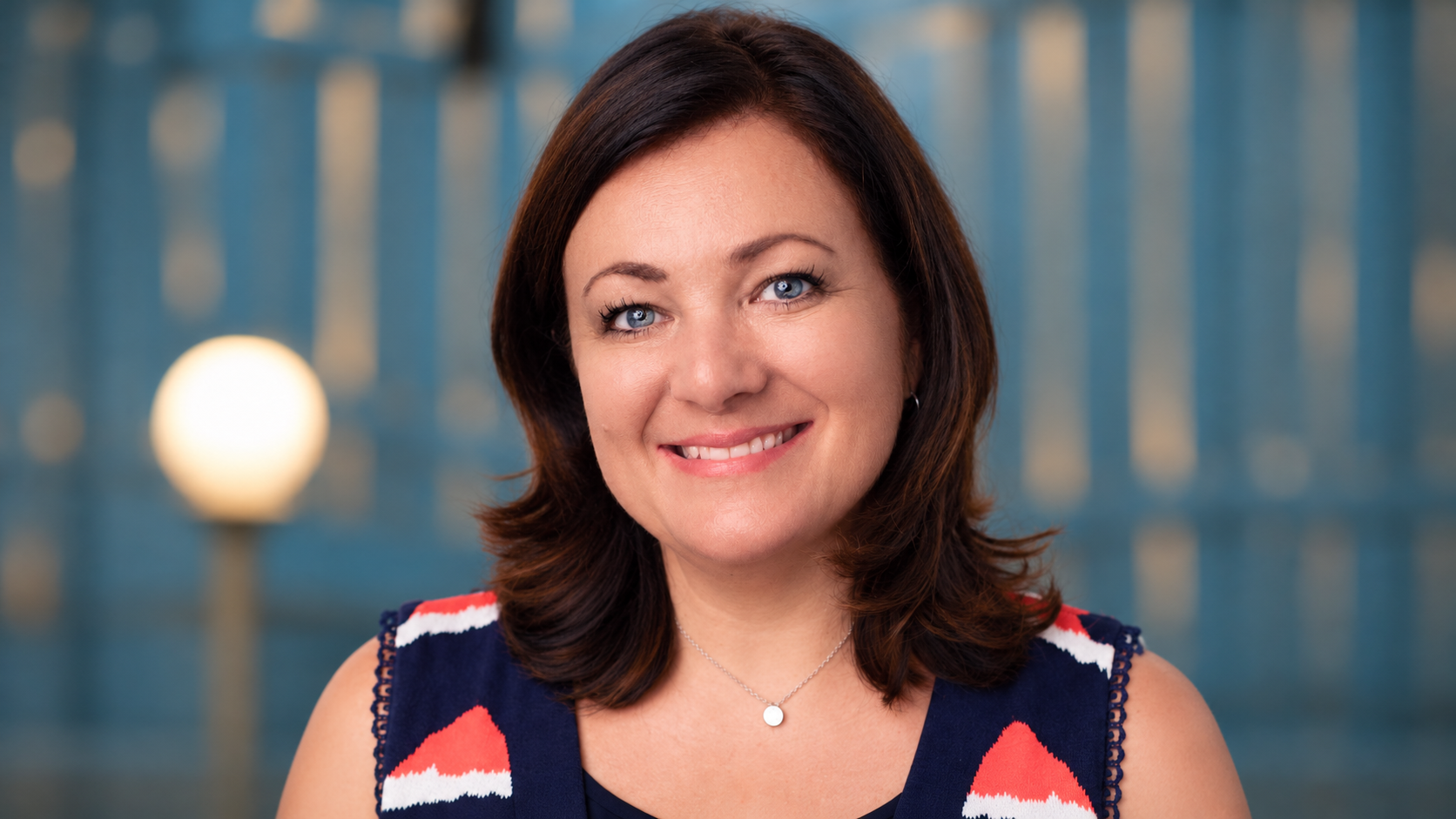
Amy Arthur, Senior Advisor
What does it take to grow when the map isn’t clear yet? Amy Arthur has answered that question in Amsterdam, Germany, Sweden and beyond, including transforming an organisation in the middle of a pandemic. In this conversation, she reflects on authentic leadership, simple playbooks for the unknown, and why the right hire is chosen for what a person can become, not only what they have done.
1. What are the most remarkable growth journeys you have encountered, and what boosted them?
The most remarkable one was also the most personal. I had been General Manager in Sweden for just six months when the pandemic hit. I was still getting to know the country and the organisation, and we had launches planned for April 2020. In the middle of all that uncertainty, I decided it was the right moment to transform the organisation rather than wait for things to settle.
I didn't have all the answers, but the organisation looked to me for leadership. So I anchored on authenticity. I was honest, and at times vulnerable, about my own situation: I couldn't see my children for seven months or my parents for eighteen. That openness built trust very quickly, and I grew enormously as a leader in that period.
The results went beyond what any of us expected. In our employee survey, 100% of the organisation said they felt inspired. Our transformation was profiled in a global pioneers report championed by the global CEO, and we won profitability and growth awards at global level. We also received a letter of thanks from the Swedish health authorities for our proactive communication during the pandemic.
What boosted it? Courage to act in uncertainty, clarity about where we were heading, and a team that trusted each other enough to move fast. That's also what it takes to make it beyond Bullerbyn. A global market rewards companies that can adapt and lead when the map isn't clear yet.
2. Any learnings from your diverse experiences of leading growth journeys?
Three stand out:
Launches are won or lost before launch. In my global roles I sat on core teams defining trial endpoints, launch sequence and pricing. Those early decisions shape everything that follows. When I led respiratory marketing across eight markets, from the Nordics to Greece and Belgium, I saw how much success depended on understanding early what each payer would need. In Belgium we were initially categorised at a disadvantage, went back with the right evidence and got re-categorised.
The winning combination is a strong global strategy with local insight to operationalise it. The global strategy gives direction and consistency. Country teams that are trusted and close to their market make it work in practice.
Develop simple playbooks for the unknown. In my last role I built a model for launching new assets in rare diseases. Growth that depends on heroics doesn't scale. A simple playbook gives teams a starting point when the territory is new, with room for judgement along the way.
3. You are known for your authentic leadership and approachable character. How has this benefitted you in leading diverse teams?
I've led teams across many countries and cultures, and what works everywhere is the same: people need to know where they stand and that you mean what you say. Sweden during the pandemic showed me how far that can take a team, but it matters just as much on an ordinary Tuesday.
Being approachable means problems reach me early, while they're still small. Being authentic means people don't have to decode me, which matters a lot when you're working across languages and working styles. In my experience, teams take more ownership and more sensible risks when they trust their leader.
4a. Executive Ventures aims to help companies recruit for the development steps ahead. Is this even possible?
Yes, and I've seen it work. One of the most remarkable growth journeys I've been part of was someone I mentored. He was a high-potential brand manager, and we gave him a double promotion to Sales Director. External candidates had more direct experience on paper, but he stood out because of what he could become, not only what he had already done.
He delivered strong sales growth, then moved to another pharma company to lead a business unit. Last month he launched his own life science start-up in Sweden.
For me, that's the essence of hiring one step ahead. A CV tells you what someone has done. The real question is what they will be capable of when the company reaches its next stage. This is why profiling is such an important element of matching a person with a job: it reveals potential that a CV can't. It also requires the company to be clear and honest about where it's heading. When the hire is made for today's org chart, just as the company is about to change shape, it's usually already too late.
4b. Perspectives you could bring to such a challenge?
I've seen the full arc, from early clinical decisions through pricing, launch and scaling across markets, at country, regional and global level. That helps me ask the right questions. What will this company need in 18 months that it doesn't have today? Which capability gaps become critical first? Which experience is genuinely transferable from big pharma to a smaller organisation, and which isn't? I also know what it takes for a senior person to make that move successfully, because I'm making a version of it myself.
5. Is your European bingo card full, or will you be adding more countries?
It's filling up nicely! I'm British, with five years in Amsterdam, two chapters in Germany (five years and then four), three years in Sweden and a short spell in the US. Add a Dutch partner, and now Copenhagen. Sweden holds a special place, though. My years as General Manager there left a real mark, and I'd love to buy a cabin in Sweden one day. So the bingo card isn't full yet. I'd just like the next square to have a lake and a sauna.