OnDosis continues to drive the conversation on individualized dosing in ADHD
By Rebeca Varela Lores, Investment Associate
June 15, 2026
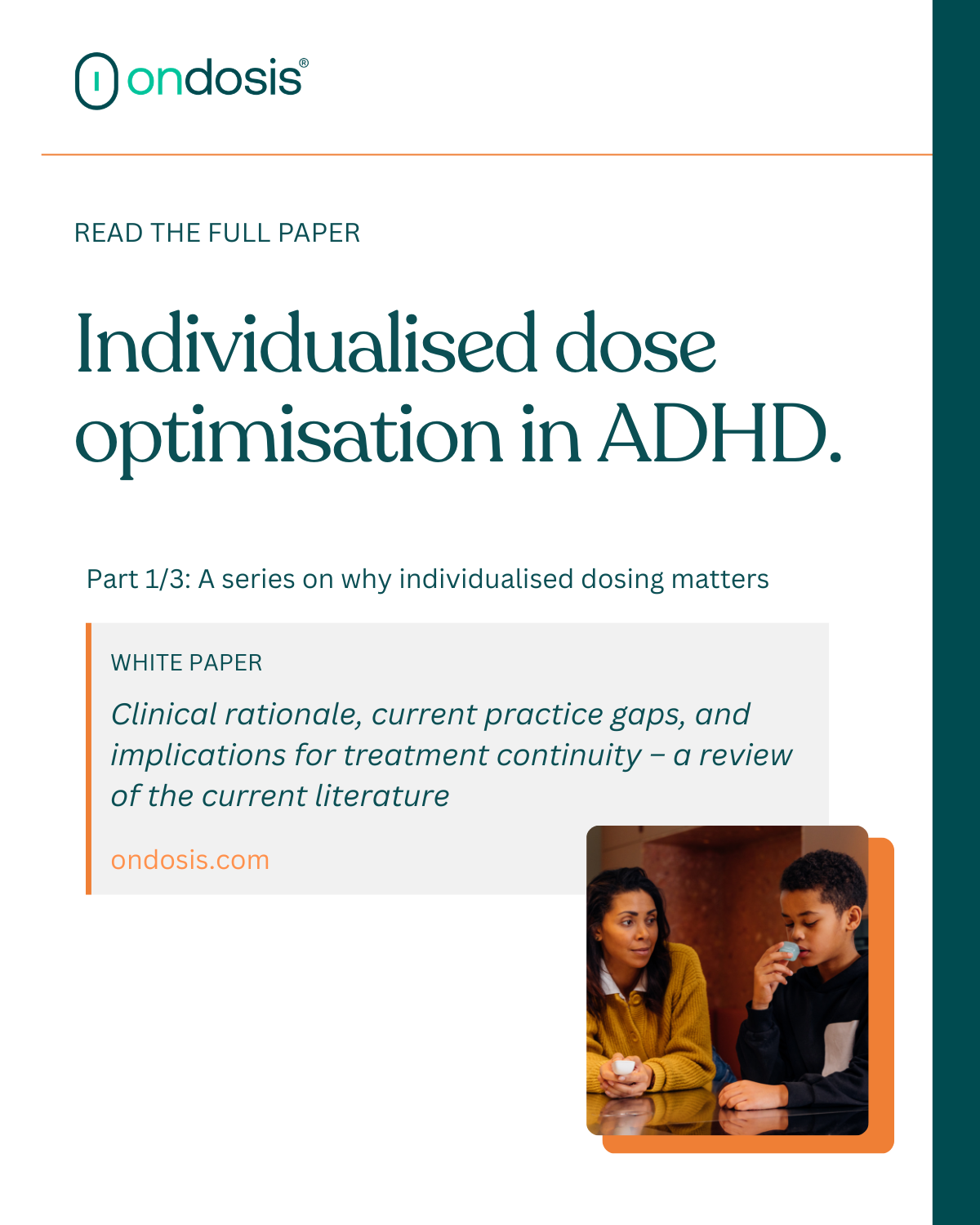
As the healthcare industry increasingly recognizes that one-size-fits-all treatment approaches often fall short, OnDosis is establishing itself as a thought leader in individualized dosing through its ongoing educational initiatives. As part of its Why Individualized Dosing Matters series, OnDosis has released a new white paper exploring one of the most important challenges in ADHD treatment today: achieving the right dose for the right patient.
Individualised Dose Optimisation in ADHD: Clinical rationale, current practice gaps, and implications for treatment continuity reviews the current literature on stimulant treatment for ADHD and examines the critical role of dose titration and ongoing dose optimization in clinical outcomes.
While stimulant medications are well-established and effective in reducing core ADHD symptoms, treatment success depends on balancing efficacy with tolerability. Adverse effects such as decreased appetite, weight loss, and insomnia can contribute to poor adherence and treatment discontinuation, leaving many patients untreated or undertreated over time.
The review highlights that although individualized dose optimization is widely recognized as clinically important, it is not consistently implemented in routine practice. This gap may contribute to treatment discontinuation and suboptimal outcomes, underscoring the need for more precise and patient-centered dose adjustments.
By bringing attention to the challenges of treatment continuity and the potential benefits of individualized dosing strategies, OnDosis continues to contribute valuable insights to the evolving ADHD treatment landscape.
Read the full white paper to learn more about the evidence supporting individualized dose optimization and its potential impact on patient outcomes.
https://www.ondosis.com/our-science/individualised-dose-optimisation-in-adhd