
Meet Our Accelerators
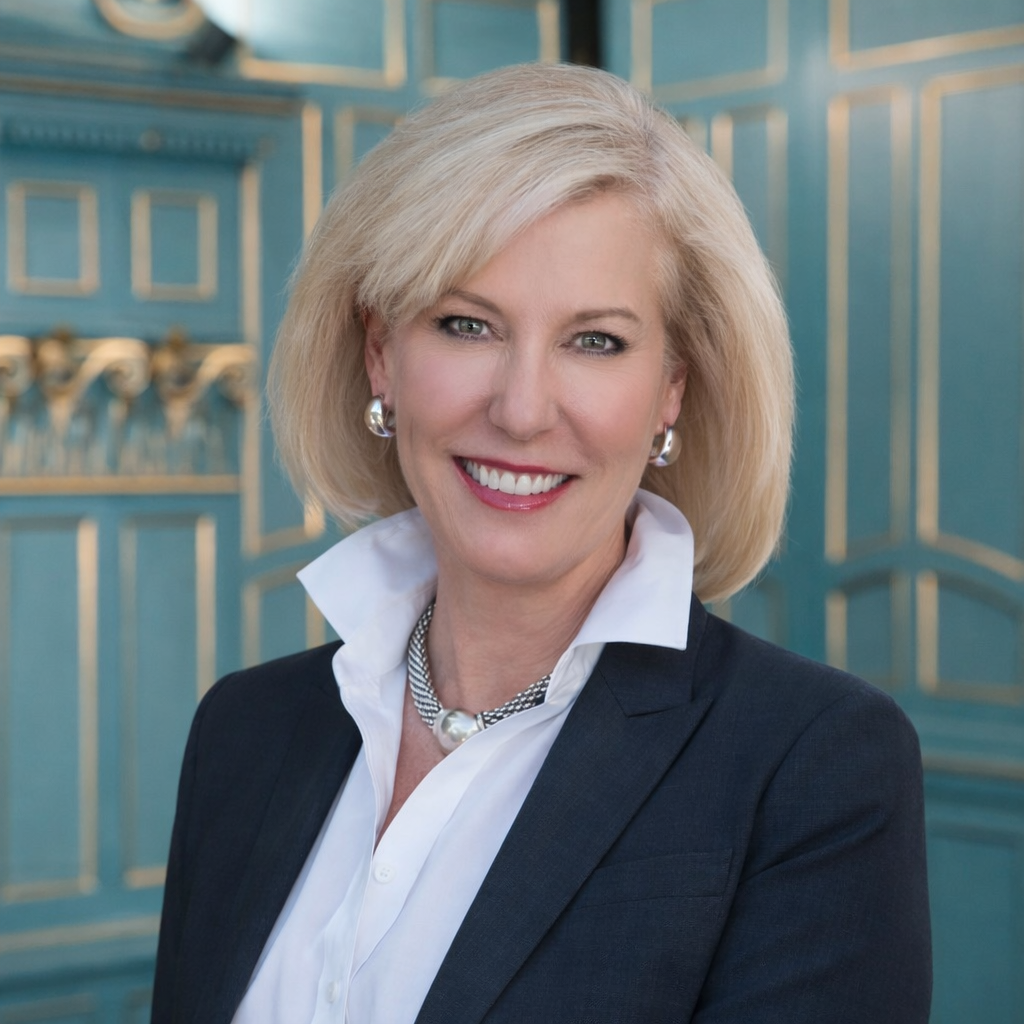
Julie Ames, Senior Advisor at Ventures Accelerated
“Scientific excellence is assumed, what is being evaluated is clarity of judgment”
Meet Julie Ames,
Julie Ames is President and CEO of The Cambridge Group, International, an executive consultancy specializing in corporate communications, investor relations, public affairs, and executive leadership. She holds a Master's in Public Affairs from Harvard’s Kennedy School of Government and a BA in Economics from the University of Virginia. She has extensive experience in investor relations and financial services, particularly in the life sciences and biotechnology sectors, having served as analyst at the Federal Reserve Board, and leading all communications for the IPO of an oncology company. She has held leadership roles at Hill and Knowlton, CancerVax and Life Technologies, now Thermo Fisher Scientific.
Your career has spanned several parts of the life science ecosystem, including being on the investor side of the table. How do you integrate those various perspectives into the communication support you are giving to companies today?
What’s been most valuable for me is seeing how different stakeholders evaluate companies in real time. Whether you’re talking to investors, regulators, or partners, everyone is ultimately trying to answer the same question: is this a team making thoughtful, disciplined decisions?Do they have the patient front and center? The lens just shifts depending on who you’re speaking with.
So in my work today, I try to help companies anticipate those perspectives before they’re in the room. It’s less about refining a message and more about making sure the story reflects a leader’s vision and how the team executes —why a certain path was chosen, what was deprioritized, how the science connects to regulatory and reimbursement realities. When that alignment is there, the narrative holds up much more naturally across audiences, and you don’t have to keep re-explaining yourself.
Do you see any differences in style of presenting innovation to European and American audiences?
There are differences, but they are often more about emphasis than substance. European companies—particularly those from the Nordics—tend to lead with the science, often with a high level of rigor and depth. That is a real strength. In the U.S., particularly in investor settings, there is an expectation that the science is strong, but the focus quickly shifts to decision-making—how that science translates into a credible path to value, and how risks are being actively managed.
What I often work on with European companies is not changing the substance, but sharpening the framing. The question becomes: can you explain your science clearly, but also articulate what you have chosen not to pursue, how you think about competition, and how you will realistically get to patients? Do you have a regulatory and reimbursement strategy? U.S. audiences are looking for clarity and discipline early, not just scientific excellence. When companies can combine the rigor of their science with that level of strategic clarity, they resonate very strongly.
You recently spent time in the Nordics during Venture Road Nordics and gained firsthand insight into both the opportunities and challenges. What are your key reflections from that experience so far?
Spending time in Stockholm during Nobel week was a personal thrill – especially since one of the honorees has a connection to San Diego, my home town! It offered a vivid illustration of the Nordic life science ecosystem at its best. There is a deeply rooted respect for science and discovery, reflected in institutions such as the Karolinska Institute. Equally notable is the collaborative mindset among Swedish and Nordic life science leaders, which creates a strong foundation for innovation.
What stayed with me, though, was not just the strength of the science, but how close many of these companies are to being highly competitive on a global stage. The shift that happens in those environments is subtle but important. Scientific excellence is assumed; what is being evaluated is clarity of judgment. How leadership teams articulate their vision, strategic plan, competitive landscape, capital allocation, depth of talent, patent portfolio, and unmet medical need becomes the differentiator. It is not about being louder—it is about being more intentional.
Ventures Accelerated is a global team of life science leaders, all bringing their flavor to the mix of expertise and networks needed to succeed in life science. How do you see your role in this? And what are you most curious about or looking forward to as you come into this network?
What I find most compelling about Ventures Accelerated is the range of experience across the group. There’s deep expertise, but also very different perspectives on how companies are built and scaled in different markets. There is also a universal passion for helping companies create therapies for patients around the world and improve the human condition. I see my role as helping companies translate strong science into narratives that are clear and credible, especially for investors and partners who are looking at many opportunities at once.
I’m particularly interested in how we can support companies earlier—before they’re in high-pressure moments—so they have that clarity around positioning from the start. And I’m genuinely curious to learn from others in the network as well. There’s a lot of value in understanding how different regions approach value creation, and how those insights can be shared. That exchange is where I think the amazing Ventures Accelerated network can really differentiate itself.