
Academic–Industry Collaboration as an Engine for Vaccine Innovation
December 17, 2025
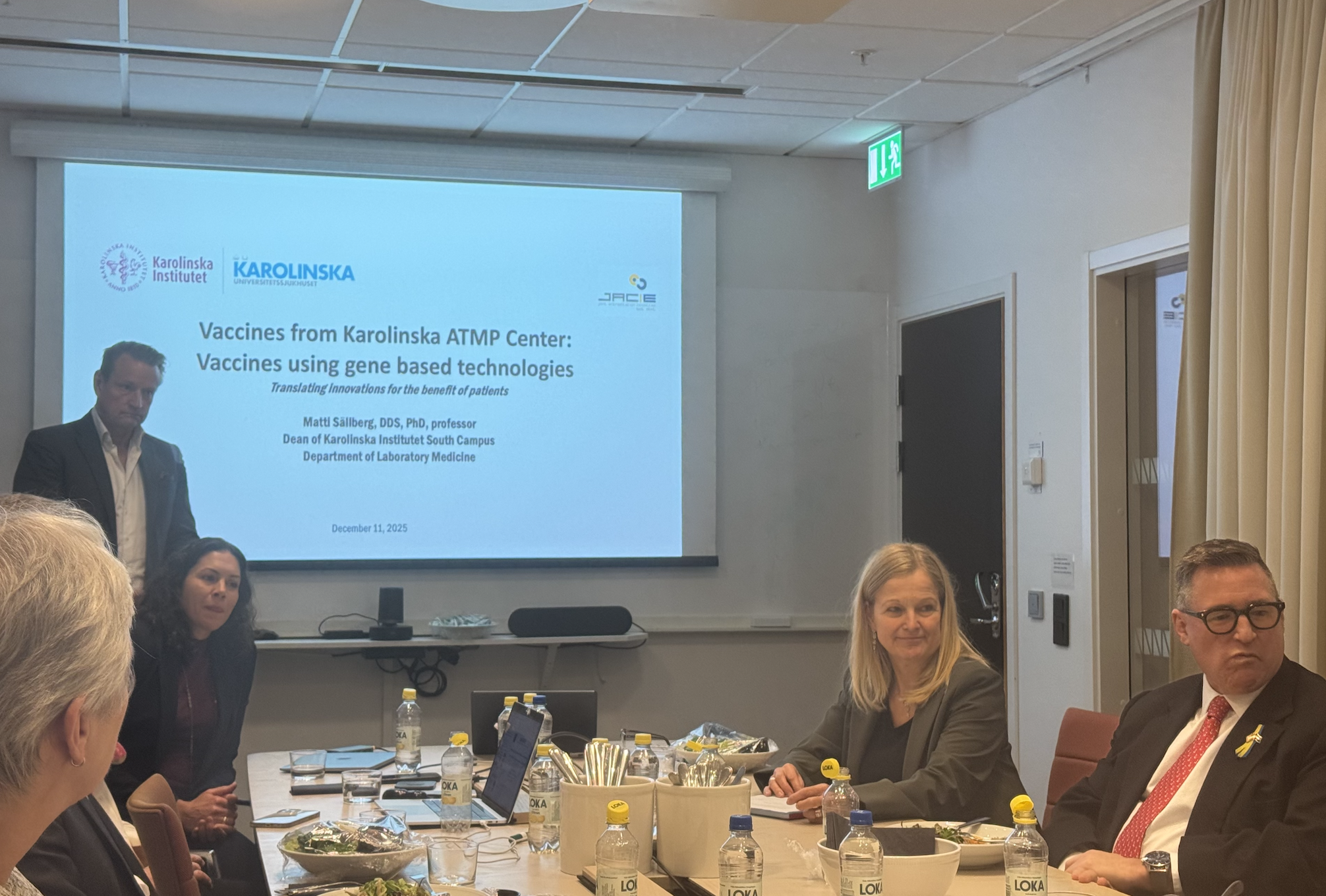
Picture taken from the Venture Road Nordics panel discussion, where Matti Sällberg and Janet Hoogstraate explored the role of collaboration in advancing vaccine innovation
During Venture Road Nordics, collaboration was not just a theme, it was the operating principle. This came into sharp focus during a panel discussion presented by Janet Hoogstraate, CEO of NorthX Biologics, and Matti Sällberg, Dean Karolinska Institutet South Campus. The session brought together leaders from academia and industry to explore how academic–industry collaboration is shaping the future of vaccine development. Set against global uncertainty and rapid scientific progress, the discussion underscored the growing importance of cross-disciplinary, cross-sector, and cross-border collaboration in translating science into impact

Janet Hoogstraate, CEO of NorthX Biologics
A recurring theme throughout the panel was the role of people-driven collaboration. Janet Hoogstraate, CEO of NorthX Biologics, emphasized that innovation gains momentum when individuals from diverse backgrounds come together to share perspectives and challenge each other’s assumptions. Initiatives like Venture Road, which bring together ecosystems from the Nordics, Germany, and North America, create the conditions for these interactions, often acting as the spark that turns ideas into sustained partnerships and, eventually, tangible solutions.
The panel also addressed the broader policy and geopolitical context shaping vaccine development today. With shifting priorities in the U.S. and elsewhere, the discussion highlighted how a growing focus on security increasingly includes health security. While policy changes may lead to adjustments in funding and strategy, they can also open new opportunities. From Janet’s perspective, strong and resilient relationships between academic institutions and the life science industry are what enable innovation to continue despite external change.
Sweden’s role in the global vaccine landscape was another important focus. Building on a long legacy in vaccine research and a strong belief in prevention, Sweden (together with the other Nordic countries) plays a significant role in both vaccine development and humanitarian distribution. The panel underscored the dual challenge facing the field: ensuring existing vaccines reach those who need them most, while simultaneously driving the development of new ones. Here, the Nordic model of close collaboration between academia, industry, government, and funding bodies was highlighted as a key enabler of global impact.
To achieve real impact, advances in science must be matched by progress in regulatory processes, manufacturing capabilities, and supply chains. Shortening development timelines and reducing costs were identified as critical factors in ensuring that innovation can be translated into accessible, scalable solutions.
The panel presented by Matti Sällberg and Janet Hoogstraate reinforced a clear message: the future of vaccine development depends on collaboration, not only between academia and industry, but across borders, disciplines, and systems. Venture Road Nordics continues to provide a platform where these connections can form, evolve, and ultimately help bring bright ideas to reality.