
40 Years On: What the Ludwig Institute in Uppsala Teaches Us About Building Science
By Helena Strigård, CEO and Founder
October 1, 2026
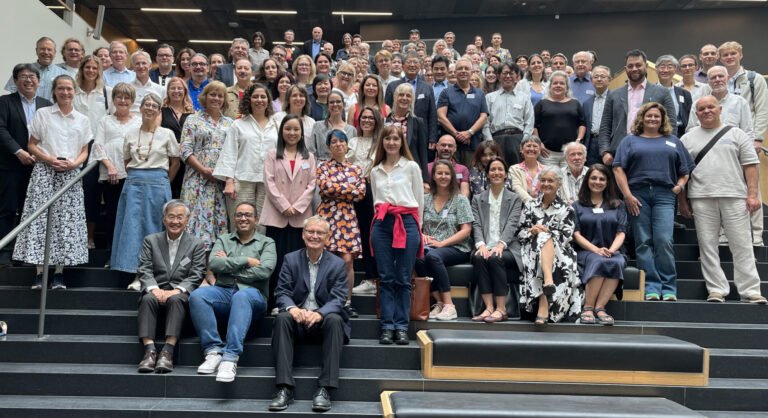
Guests at the Ludwig Institute’s 40th anniversary celebration in Uppsala in 2026
In September, 140 people gathered in Uppsala to mark 40 years since the Ludwig Institute for Cancer Research opened its Uppsala branch. Many had travelled from across the world. The institute closed in 2017, when its long-time director, Professor Carl-Henrik "Calle" Heldin, reached retirement age. The reunion showed that its influence has outlasted the building.
Heldin's research on the growth factors PDGF and TGF-beta shaped how we understand tumour growth. Pharma Industry's anniversary piece makes a strong case that his most lasting contribution may be the people he trained.
A talent pipeline across continents
Around fifty Japanese researchers passed through the lab, and many now hold professorships or other senior roles in Japan. One of them, Kohei Miyazono, approached Heldin after a guest lecture in Tokyo in 1984 and was working at an Uppsala lab bench the next year. He later became dean of the University of Tokyo's medical faculty and held a senior executive role at RIKEN. Patricia Beckmann, Heldin's first postdoc, became one of the inventors behind Enbrel, moved into venture capital with Paul Allen, and now leads the gene therapy company Genosera.
Lessons worth borrowing
Structure enables people. Shared equipment, dedicated specialists and a culture where someone could always show you how to run an experiment made the lab easy to learn in. Alumni later copied the model in their own labs in Japan.
Patience over speed. Heldin advised his researchers to publish only when they had the complete story, even at the risk of being scooped.
Launch people, then let them go. Inspired by EMBL in Heidelberg, the idea was to give young scientists the best possible start and then let them fly. Long-term ties continued, including a network that extended to Leiden through alumnus Peter ten Dijke.
Looking ahead
Asked about the next 40 years, Heldin does not expect a single "magic bullet" for cancer. He expects steady progress and says it is most needed in brain tumours and pancreatic cancer. The Uppsala–Tokyo network is already working on that problem. Heldin, Miyazono and Bengt Westermark have identified HVEM as a possible treatment target for glioblastoma. Japanese companies and investors were hesitant to develop the antibody, so it was taken forward by a company in Sweden.
Heldin's main wish for the sector is a shorter path from promising preclinical results to patients, before patent life runs out. Beckmann wants to start an exchange between Sweden and Washington State on mentorship, funding and company building.
Read the full article (in Swedish) at Pharma Industry:
https://www.pharma-industry.se/langvaga-gaster-nar-ludwiginstitutet-firar-40-ar/